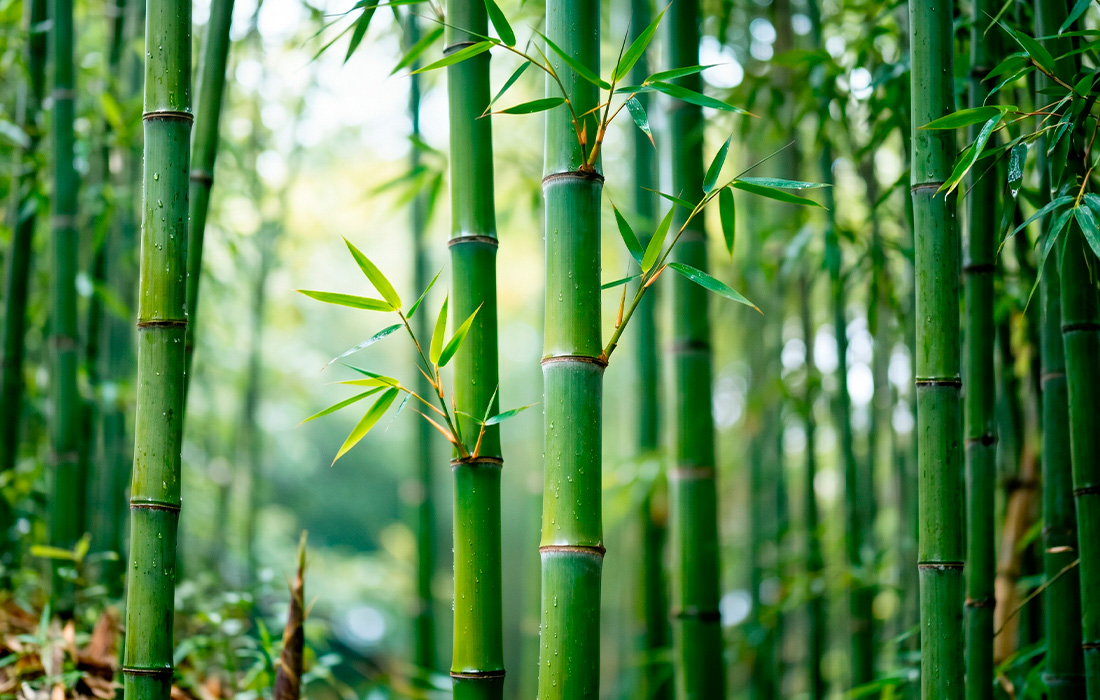
Bamboo grows so fast that it can seem to shoot up while you’re not looking. And in some cases, that’s almost true. Bamboo is an evergreen grass and the fastest-growing plant on the planet, with some species adding 20–40 in (0.5–1 m) in a single day. So, how fast does bamboo grow, exactly, and what’s the secret behind that speed? Let’s dig in.
Why Does Bamboo Grow So Fast?
Unlike many other plants, which grow only from their tips, bamboo grows from multiple growth zones along its stem (internodes) at once. This process is called intercalary growth.
Another part of the secret lies underground. Bamboo’s rhizomes produce buds that contain a miniature blueprint of the future plant, with its nodes and internodes already in place. When the growing season arrives, bamboo doesn’t waste time building new structures from scratch. It simply floods its already-formed cells with water, and the stems shoot upward almost instantly. That’s the secret behind bamboo’s legendary speed.
5 Popular Bamboo Types
Fargesia
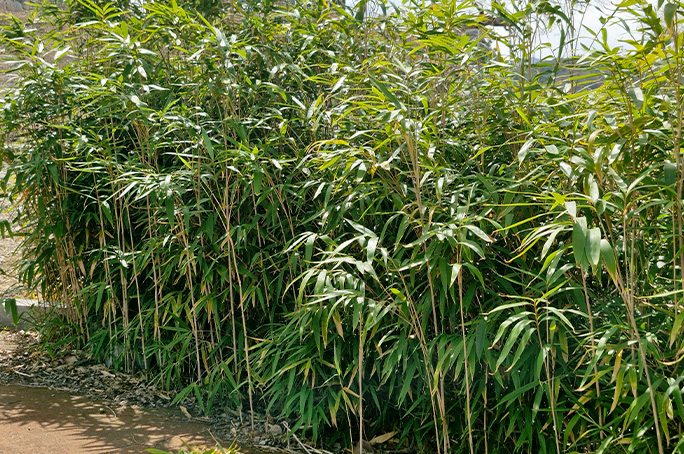
A clumping bamboo suited to temperate climates that won’t take over your whole yard. Unlike running bamboos, Fargesia has no aggressive spreading rhizomes, so it grows in neat, arching clumps, usually 10–15 ft (3–4.6 m) tall. Popular species include Fargesia murielae, known as umbrella bamboo for its graceful, drooping canes, and Fargesia nitida (blue fountain bamboo), prized for its slender, blue-green stems that take on a purplish tint in cooler weather.
Golden Bamboo
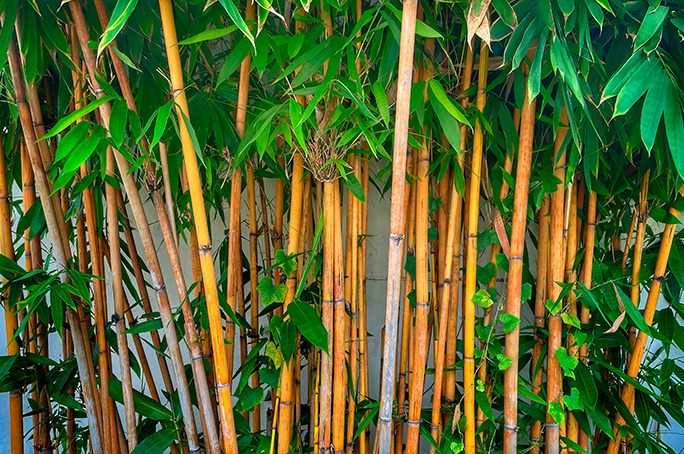
A widely grown running bamboo for outdoor gardens, loved for its striking golden-green canes and often used for living hedges. Its canes typically reach 15–30 ft (4.6–9 m) and develop a distinctive compressed zigzag pattern near the base, a quirky feature that makes this bamboo easy to identify at a glance.
Black Bamboo

Valued for its dramatic canes, this species is often grown as a stand-alone ornamental rather than a dense screen. New canes emerge green and mottled, slowly deepening to jet black over 12 to 18 months, so a mature grove shows off canes at every stage of that transformation at once.
Green-Glaucous Bamboo
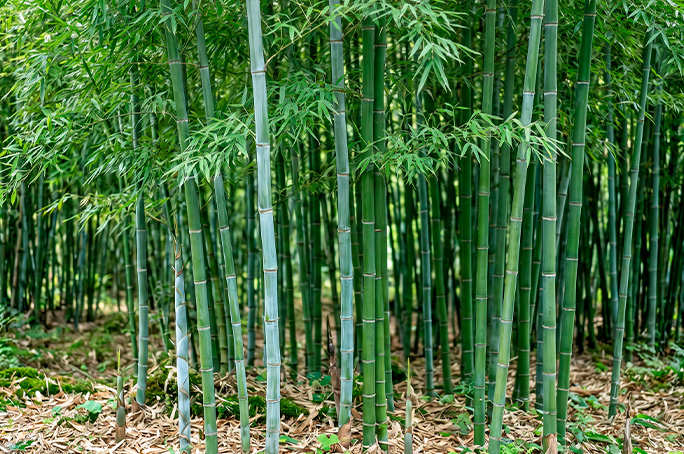
One of the tallest and most popular bamboos grown in gardens, popular in warmer regions for how little maintenance it needs. Mature canes can soar to 30–45 ft (9–14 m), while new growth has a powdery blue-green sheen that gives the species its name. Its fast, vigorous growth makes it an excellent choice for large-scale privacy screening, though that same vigor means it needs firm rhizome control to stay in its lane.
Kuril Bamboo
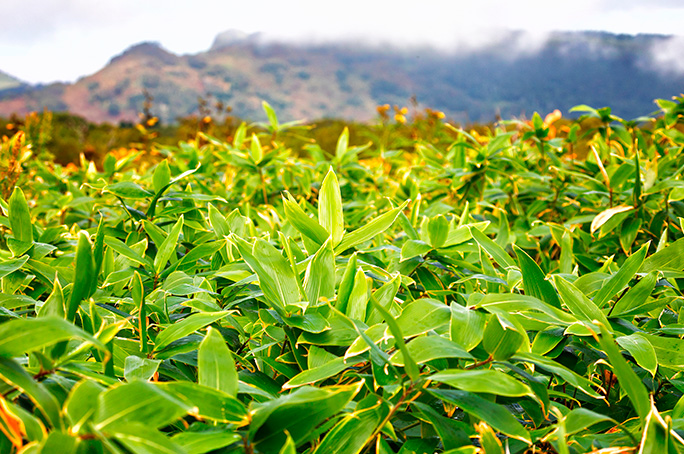
The most cold-hardy bamboo on this list, able to shrug off harsh winters with ease. Unlike the towering Phyllostachys species above, this one stays low, typically 3–6 ft (1–2 m) tall, spreading as a dense, broad-leaved groundcover rather than forming a tall screen.
Bamboo Plant Care Essentials
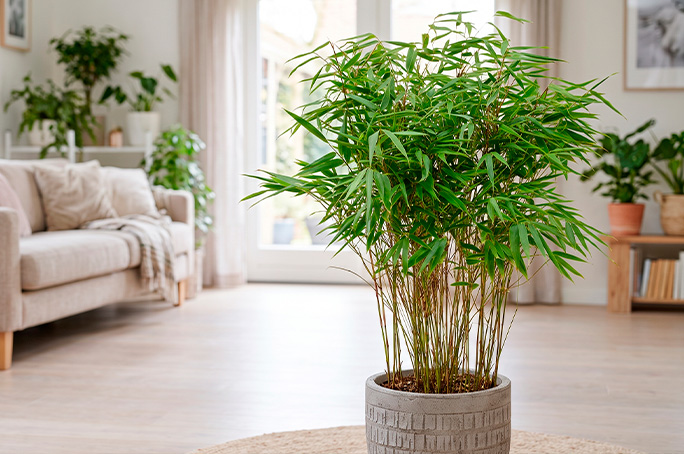
Bamboo is a relatively low-maintenance plant, but a little attention to the basics goes a long way.
☀️ Light: Most bamboo species prefer bright, filtered light. Too much shade can leave the foliage pale, while intense direct sun can scorch it. Keep this in mind when choosing a planting spot.
🪴 Soil: Bamboo needs fertile, well-draining soil that still holds some moisture, with a slightly acidic to neutral pH (6.0–6.5).
💧 Watering: Bamboo loves moisture but hates soggy, waterlogged soil. Constant overwatering can lead to root rot and even kill the plant. Use soft, room-temperature, settled water, since bamboo is sensitive to chlorine and excess salts.
Young plants: Water 2–3 times a week during the first year, keeping the soil consistently slightly moist.
Mature plants: Established bamboo can handle brief dry spells, but for the best appearance, water when the top 1–2 in (2.5–5 cm) of soil dries out.
💊 Fertilizing: Feed with a balanced fertilizer or a bamboo-specific formula in spring and early summer. Stop fertilizing by late summer so the plant can prepare for winter.
Is Bamboo Toxic to Cats?
Good news for pet owners: true bamboo is non-toxic to both humans and pets. Its leaves and stems don’t contain any compounds known to be harmful to cats or dogs. If your pet nibbles on a few leaves or even a stem, it won’t cause poisoning. One important distinction: don’t confuse true bamboo with the lucky bamboo, which is actually Dracaena sanderiana, a completely different plant that’s toxic to pets.
How to Control Bamboo’s Spread
Some bamboos, especially running types, have rhizomes strong enough to push through asphalt. Left unchecked, bamboo can turn your yard into an impenetrable jungle in just a couple of years. Here’s how to keep it in check:
- Install a root barrier. Bury a high-density polyethylene (HDPE) barrier around the planting area to a depth of at least 24–28 in (61–71 cm), leaving 2–4 in (5–10 cm) above the soil so rhizomes can’t simply climb over the top. Angle the barrier slightly outward so that any rhizomes hitting it are directed upward, where they’re easy to spot and trim.
- Choose clumping varieties. For a compact footprint, opt for clumping bamboo, which grows in tight groups rather than creeping outward.
- Plant in containers. Sturdy above-ground or buried pots, planters, or concrete rings are a reliable way to physically restrict rhizome growth and keep the plant contained.
- Remove new shoots. In spring, cut or mow down young shoots while they’re still soft. Repeat as new shoots emerge to gradually reduce bamboo’s spread and keep its growth in check.
- Try the trench method. Dig a narrow trench about 20 in (51 cm) deep around the growing area. Check it each fall and spring, and cut through any rhizomes that have pushed across with a shovel or pruning shears.
Bamboo’s reputation as the fastest-growing plant on Earth is well earned, but that same vigor is exactly why it takes a little planning. Pick the right type for your space, keep its spread in check from day one, and give it the light, soil, and water it craves. With a little care, bamboo can become a striking, low-maintenance addition to your garden for years to come.