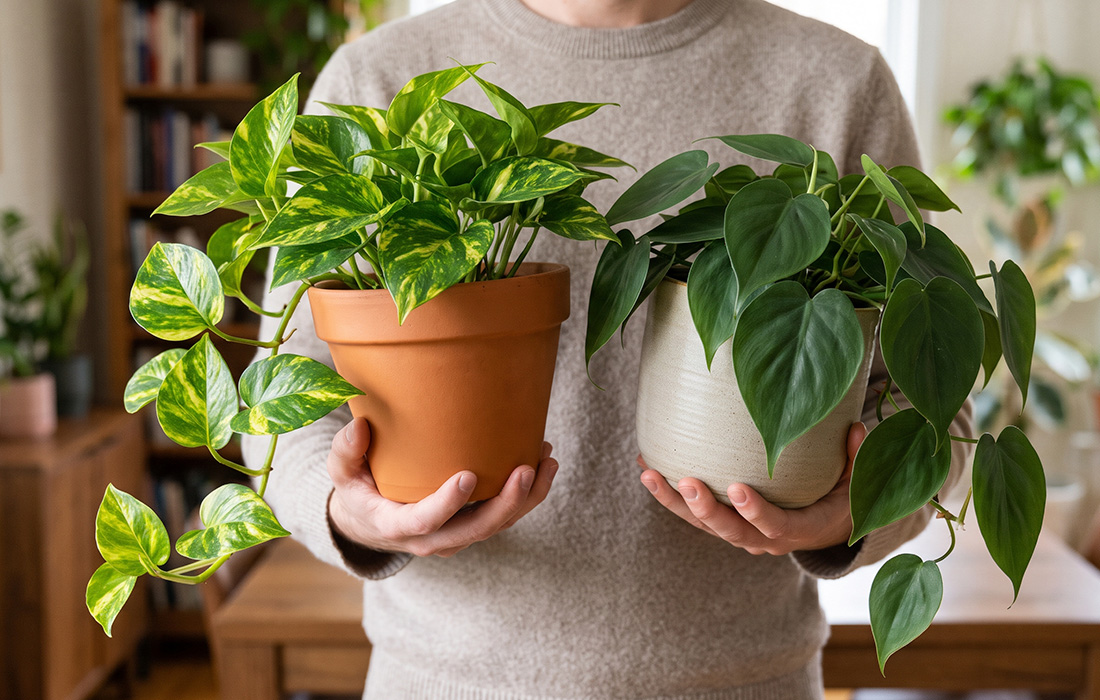
Pothos and philodendron are two of the most popular houseplants out there, and it’s easy to see why they get mixed up constantly. At a glance, their trailing vines and heart-shaped leaves can look nearly identical. But once you know what to look for, telling the two apart becomes pretty simple—and it matters because their care needs aren’t quite the same. Here’s how to identify pothos vs philodendron with confidence, plus everything you need to know to keep either one thriving.
The Main Pothos vs Philodendron Difference: Leaves
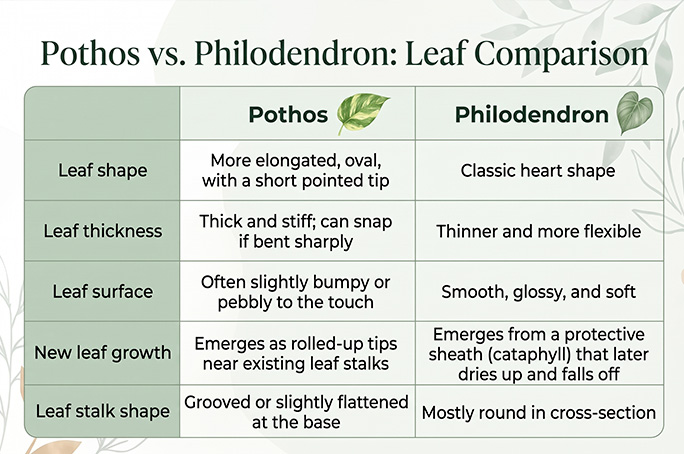
The fastest way to tell them apart is to look closely at the leaves: their shape, thickness, texture, and even how new ones emerge. Of course, not every pothos or philodendron looks exactly the same, but these telltale features will help you spot the differences.
The cataphyll is one of the most reliable clues for a heartleaf philodendron vs pothos comparison. Look for a protective sheath around an emerging philodendron leaf. Pothos leaves also emerge rolled up, but they don’t have the same persistent, distinct cataphyll. This difference can help you tell the two plants apart, even when their leaves look remarkably similar.
Aerial Roots: A Second Clue
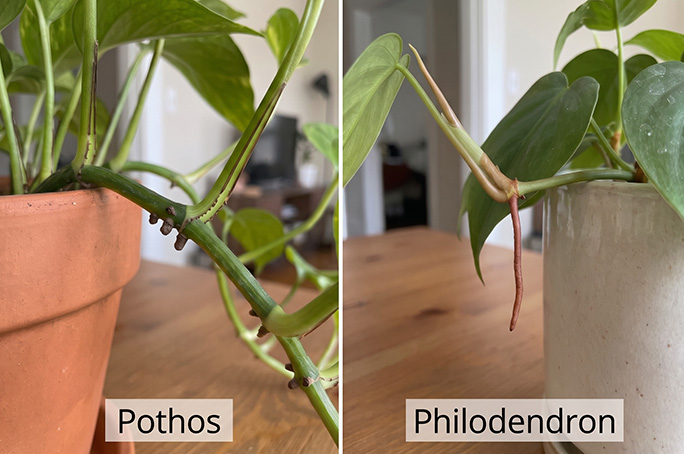
Both plants grow aerial roots, but these often look noticeably different. Pothos produces clusters of small, short root nubs at the nodes along its vine. Philodendron’s aerial roots are thicker and longer, usually just one or two per node. Over time, they can develop into long, rope-like roots.
Care Basics They Share
- Light: Both plants prefer bright, indirect light and should be kept out of direct sun. As understory plants native to the tropical forest floor, they can tolerate light shade, though variegated varieties need brighter light to hold onto their patterned coloring instead of fading to solid green.
- Temperature: Aim for 68–77°F (20–25°C) during the growing season and no lower than 61°F (16°C) in winter. Both plants are sensitive to sudden temperature swings and cold drafts, so avoid placing them near open windows when ventilating your home in winter.
- Humidity: Moderate to high humidity (50% or above) keeps both plants happiest. Wiping the leaves regularly with a damp sponge helps raise humidity while also clearing away dust, and both plants respond well to occasional misting with room-temperature water.
- Soil and drainage: Both plants need a loose, airy mix that drains well. A standard aroid mix with added perlite, coconut husk chips, and charcoal works great, and a solid drainage layer (like expanded clay pebbles) at the bottom of the pot is a must.
- Fertilizing: Feed with a balanced fertilizer for foliage plants every 2–3 weeks during active growth, from spring through fall. Skip fertilizing entirely in winter.
- Training and support: As vines, both plants can get leggy fast. Pinch back growing tips regularly for a fuller, bushier look. For larger specimens, a coco coir pole gives aerial roots something to grip, which encourages the plant to grow larger leaves as it climbs.
Where Care Really Diverges: Watering
Philodendron prefers the top third of its soil to dry out between waterings and is sensitive to both over- and underwatering. Pothos is noticeably more drought-tolerant and handles a little drought far better than soggy soil. Let its soil dry out nearly halfway, or even up to two-thirds of the pot, before watering again. For both plants, stick to room-temperature water that’s been left to sit for a day.
Once you know what to look for, telling pothos and philodendron apart becomes much easier. Their care overlaps on most fronts, but watering is where it’s worth paying a little more attention. Get that right, and either plant will reward you with the fast, lush growth they’re both known for.