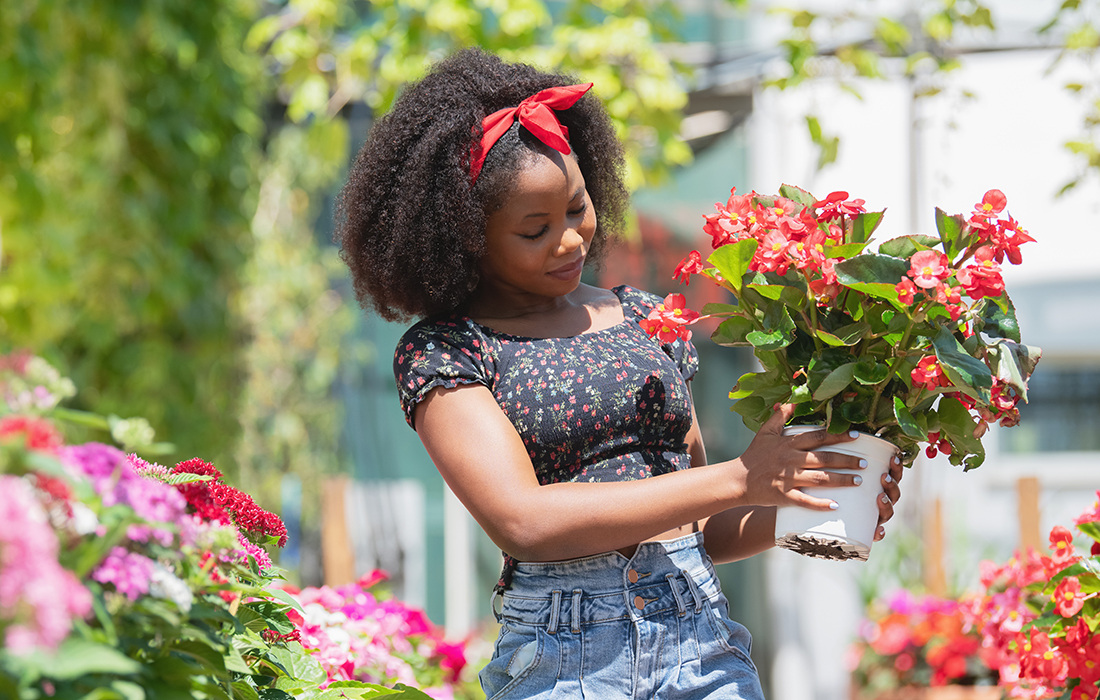
Green is the most common color plants tend to dress themselves in, and there’s nothing wrong with that. But if you’re on the hunt for something to liven up your garden or windowsill, check out these rebellious standouts that aren’t afraid to make a vibrant statement.
Amaranthus tricolor
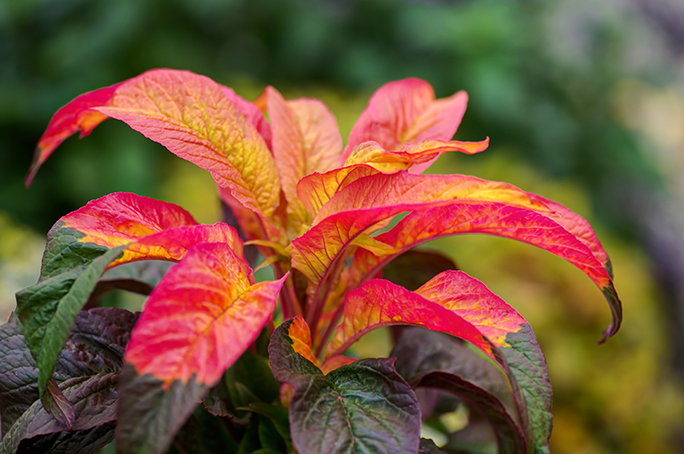
Who needs pretty flowers if your foliage looks like fireworks? Sometimes referred to as the summer poinsettia, this pretty plant is grown for its ornamental and edible properties. Amaranthus leaves and stems are eaten in Africa and Asia. In Korea, it grows abundantly and is usually foraged instead of cultivated. But even if you don’t plan on adding it to the menu, this colorful plant will still give your eyes something to feast on.
Begonia
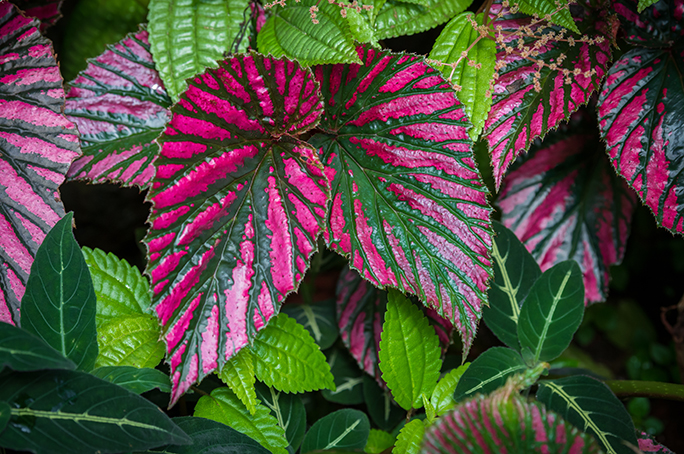
The king begonia isn’t afraid to make a statement with its lush and colorful leaves. Several cultivars of this genus exhibit striking, almost neon-like colors and take on different shapes from hearts to seashell swirls. Check out Begonia brevirimosa subsp. exotica if you need some magenta in your life, ‘Ring of Fire’ will remind you of a watermelon tourmaline, ‘Black Mamba’ will satisfy your gothic side, while Begonia maculata will stun you with its quirky retro polka dots.
Caladium bicolor
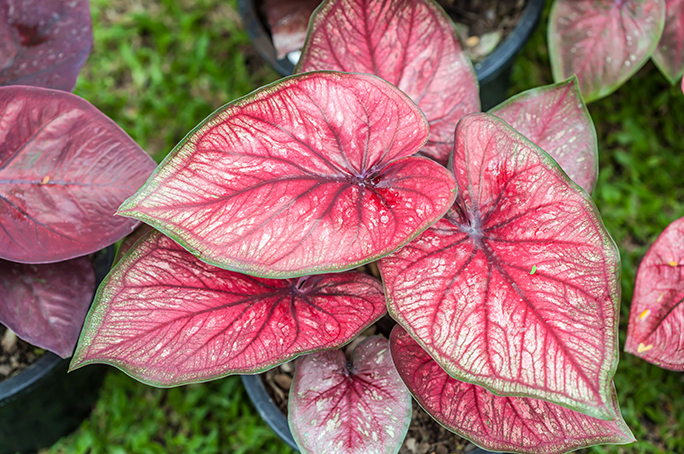
Affectionately called the elephant’s ear, this plant has over a thousand cultivars. Its foliage comes in multiple patterns, shapes, and bright colors (usually a mix of white, green, and magenta), making it popular in landscape design but also as an indoor plant. Caladium is usually grown as an annual, although you can overwinter the tubers to save it for next year. It’s not a particularly hardy plant and won’t tolerate droughts or cool temperatures, so if you have cold winters, it’s best to grow it as a houseplant and water regularly.
Hypoestes phyllostachya
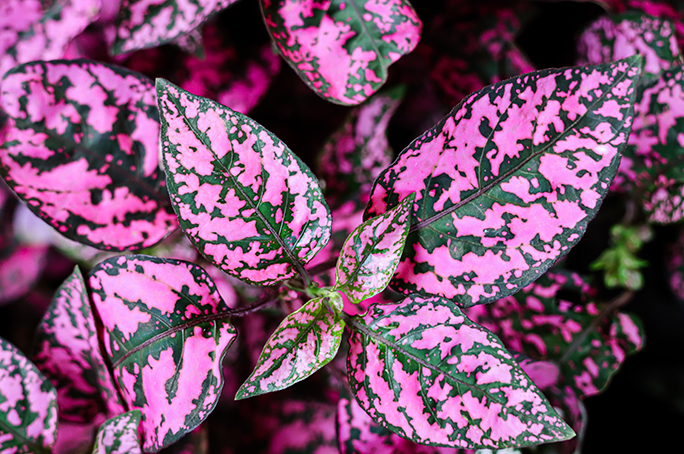
This cute little guy is also of the opinion that green is mainstream. Depending on the cultivar, its leaves look like they were carelessly spray-painted with green, pink, red, and white, and the so-called polka dots appear as merged rounded stains. Hypoestes will brighten up your windowsill and is rather low maintenance.
Gynura aurantiaca
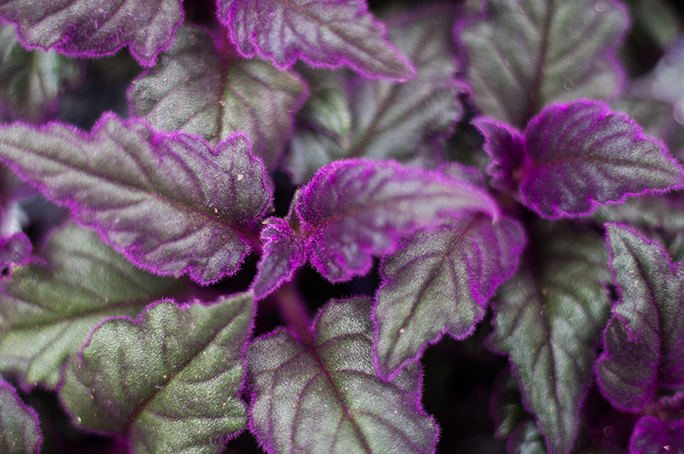
A little low-key on the color, Gynura ayrantiaca, commonly known as the purple passion, has dark-green leaves and purple fuzz that covers the entire plant, making it quite striking depending on the lighting. It’s not a large plant, but it can grow long vines which may become a stunning piece of home decor. During the blooming season, it can produce around 1–5 orange flowers. If you find their intense smell overpowering, just remove them.
Cordyline fruticosa
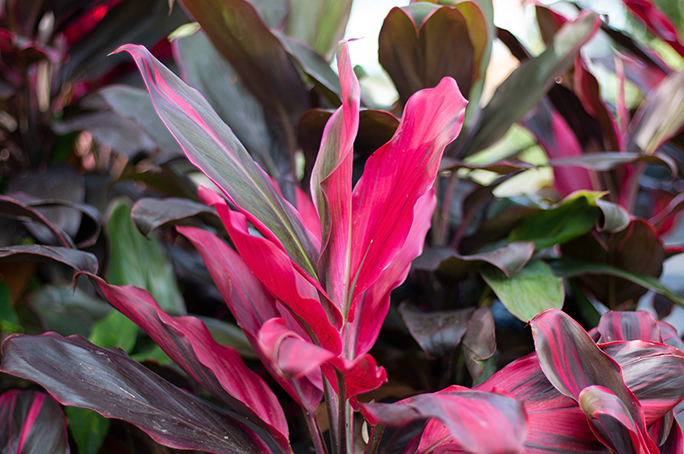
If you’re in a tropical mood, Cordyline will help you match your surroundings to it. This not-so-green green pet likes warmth, but it’s otherwise easy maintenance and perfect for containers and open ground alike. Unlike flowering plants that give you color only for a certain time of the year, the spiky fuchsia foliage of Cordyline will always create a bright spot wherever it’s located.
Colocasia esculenta
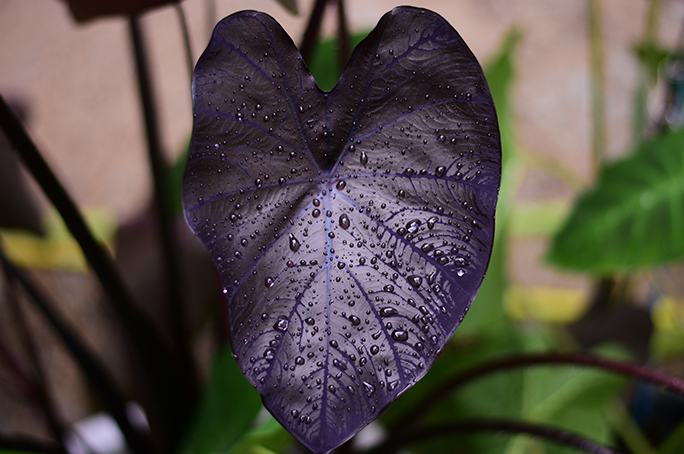
Want something on the complete opposite scale of the spectrum? Although most Colocasia plants come in various shades of green, check out its cultivars ‘Black Magic’ and ‘Black Coral.’ These gothic specimens look like they belong on the set of “The Addams Family” or in a horror house. Dark hues can make a statement, and that’s exactly what you’re going to get with the plants’ large heart-shaped leaves and a shade of purple so dark it’s near-black.
Coleus
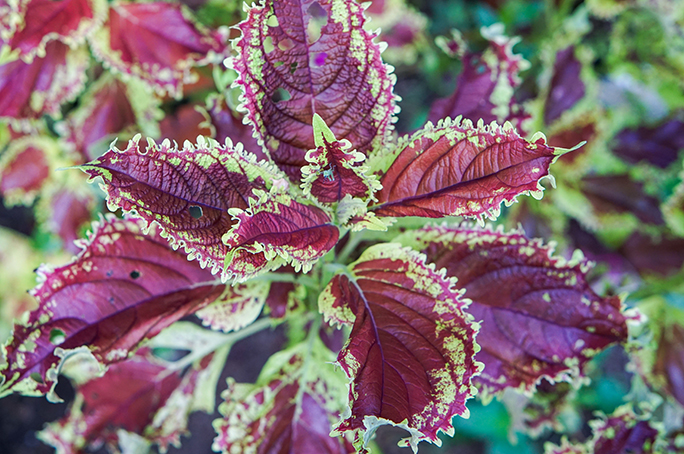
Coleus has striking cultivars with various colors and patterns, and sizes ranging from 12 to 18 in (30–45 cm) making them perfect for open soil and containers alike. Check out the ‘Red Trailing Queen’ for burgundy leaves with green edges and ‘Ruby Ruffles’ for watercolor-like patterns of pink and green. ‘Meandering Linda’ has a gorgeous magenta hue, and ‘Wizard Sunset’—something akin to a warm, toasted peach.
These colorful specimens are great if you want a little variety in your green pets. We guarantee they’ll make every day bright, no matter the weather.