
The moment you type “plant identifier” in the App Store or Google Play, you’ll instantly see a slew of options on Plant identification and care technology leveled up significantly in 2025. Most tools can now recognize a specimen in seconds, but a real plant identification app comparison reveals a significant gap. While a basic ai plant identifier can answer the question “what plant is this?”, only the best app to identify plants will actually help you keep them alive with a professional plant care guide and ongoing support, without hiding essential features behind a paywall.
The challenge for modern plant lovers isn’t just finding a plant scanner; it’s finding a reliable plant identifier that offers a high-accuracy plant health diagnosis. Whether you’re using plant identification online to explore local flora or seeking a dedicated garden plant identifier for your backyard, you need a tool that delivers real value. This guide explains how to identify plants and choose the right plant name finder to ensure your green pets thrive.
#1 Plantum (The Ultimate Nature Utility)

Plantum is more than just a plant scanner; it’s a platform backed by professional botanists. While many tools for plant identification online focus solely on fast AI recognition, Plantum combines a world-class AI plant identifier with curated insights. It’s widely considered the best app to identify plants because it bridges the gap between a quick plant name finder and a professional plant health diagnosis tool.
Beyond answering the “How do I identify this plant?” question, Plantum serves as a vital educational resource through its free programs for students. From high-accuracy plant identification to a data-driven plant care guide, it remains the premier choice for those who value an expert-led approach. If you’re looking for a garden plant identifier that offers real expert consultations, Plantum is your go-to plant care app in 2026.
⭐ 4.6
Platform: iOS/Android
Trial period: 7 days for free
Best for: Users who want a reliable, all-in-one care and identification app with real expert involvement.
Pros
- Smooth user flow
- Extensive feature set: Pot and Light Meter, spaces for grouping indoor and outdoor plants, detailed care guides, reminders, Vacation Mode, disease diagnostics and Weather Tracker
- AR plant recognition for a more immersive experience
- IDs plants, mushrooms, insects, and rocks
- Consultations provided by real botanists
- Free access to premium features for students and educators
- Insightful, botanist-curated educational articles
Cons
- No offline support
- Subscription required for unlimited access to advanced tools
- The wealth of features may feel overwhelming for total beginners
#2 PlantIn (The Daily Coach)

PlantIn is a friendly, all-in-one companion for those starting their green journey, offering handy tools like quick plant and mushroom identification and automated disease detection. With its easy-to-use water reminders and custom care routines, it’s a helpful little assistant for keeping your green pets happy. Need extra help? Get in touch with an expert or join the app’s large community to ask questions, pick up new tips, and improve your skills.
⭐ 4.6
Platform: iOS/Android
Trial period: 3 days for free
Best for: Users who want advanced diagnostics and are comfortable with premium pricing.
Pros
- Sleek user experience
- Packed with features
- Plant and mushroom identification
- AR mode for plant recognition
Cons
- No offline identification mode, except for mushrooms
- Many advanced features are locked behind paywalls
- May feel overly complex for casual users
#3 PictureThis (The Instant ID Camera)

PictureThis is a great tool for nature fans who want quick answers on the go. Beyond identification, it adds helpful touches like location-based toxicity alerts to keep you and your pets safe. While it’s a fun way to handle the basics of gardening, its more specialized features, like bird and insect ID, are tucked away behind a subscription, so it works best as a starting point for casual backyard exploration.
⭐ 4.8
Platform: iOS/Android
Trial period: 7 days for free
Best for: Users who want the most robust scan-first experience.
Pros
- Seamless navigation
- Detailed plant characteristics
- Various add-ons like Water Calculator, Light Meter, Repotting Checker, plant-ebooks, Auto Disease Diagnosis, and consultations
- Plant, tree, weed, insect, and bird ID
Cons
- No offline mode
- Many care features are behind paywalls
- Some care suggestions may vary in reliability depending on conditions
#4 PlantParent (The Newbie Plant Coach)

Plant Parent offers a friendly blend of plant identification, care reminders, and health tools. Its free version gives a peek into basic plant care and disease info, providing a simple foundation for new plant owners. For those who want to unlock the full experience, the premium tier adds one-on-one consultations and extra content, making it a straightforward, steady tool for hobbyists who enjoy a simple approach to their daily routine.
⭐ 4.7
Platform: iOS/Android
Trial period: 14 days for free
Best for: Beginners who want simple guidance and reminders without advanced features.
Pros
- Intuitive design
- Good mix of plant identification and ongoing care reminders
- Disease diagnosis and custom care plans
- Longest free trial
Cons
- No offline mode
- Identification is limited to plants only
- Some core features are tied to the premium version
#5 Pl@ntNet (The Science Map Maker)

This is a great free app if you want your plant ID to support a bigger cause. Every photo you snap contributes to a global biodiversity map, serving as a solid tool for mission-driven hobbyists who don’t mind a basic interface. The identification feature requires clear, detailed photos, which makes the app a straightforward, hands-on utility for citizen scientists rather than a full-featured nature companion.
⭐ 4.6
Platform: iOS/Android, web-based version
Trial period: Free to use
Best for: Plant lovers who want simple IDs and like contributing to science.
Pros
- Free to use
- Streamlined UI
- Extensive database of plants and trees
- ID results are verified by botanists
- Every observation feeds into a global biodiversity database
Cons
- No offline mode
- Limited to plant identification only
- No additional features like care tips, reminders, or disease diagnosis
- Needs multiple high-quality images for accurate results
#6 Seek by iNaturalist (The Kid-Friendly Scout)

Seek is a simple, free tool designed for casual nature walks and family fun, helping you identify local plants, animals, and fungi. The app’s growing database from the National Geographic Society and the California Academy of Sciences makes nature exploration simple and fun. With its focus on privacy, Seek is a safe option for curious kids or hikers who want a quick peek at the world around them without any comprehensive plant care features.
⭐ 4.8
Platform: iOS/Android
Trial period: Free to use
Best for: Students, educators, and users interested in nature exploration over plant care.
Pros
- Free with no ads
- Straightforward interface
- Real-time identification of plants, fungi, and more
- Gamified learning through badges and challenges
- Privacy-focused design
Cons
- No offline mode
- No additional features like care reminders, expert tips, or disease diagnosis
- Identification may be less specific than other apps
- Not designed for long-term plant tracking
#7 Planta (The Watering Sidekick)

Planta functions primarily as a digital logbook to track your plant collection and basic watering schedules. While it offers a place to explore plant care descriptions and set reminders, it’s a bit of a locked-gate experience. Almost every advanced feature is reserved exclusively for paid subscribers. Even plant identification is tucked behind the paywall, leaving free users with a helpful, but limited, watering reminder rather than a proper botanical toolkit.
⭐ 4.8
Platform: iOS/Android
Trial period: Not available
Best for: Plant owners who want a focused care regimen rather than a pure ID tool.
Pros
- Intuitive UI
- Additional features include Light Meter, Weather Alerts, Watering Schedule, care reminders, Dr Planta, Care Share, and more
- Smart filters for easy search
Cons
- No offline mode
- Identification is limited to plants only
- Required sign-in even for the free version
- Subscription is required to access the full feature suite
- ID tool is locked behind a paywall
#8 PlantAI (The Plant Hotline)

Think of this app as a chatbot you can text for any plant-related questions. It’s designed for instant interactions, allowing you to type a query or upload a photo to get an automated answer on identification or pest issues. While it’s a handy tool for rapid-fire AI replies, the full experience is reserved for the Premium tier. It’s a convenient, fast option for casual users who want an automated helper.
⭐ 4.5
Platform: iOS/Android
Trial period: 7 days for free
Best for: Users who prefer chat-style interaction and quick answers on the go.
Pros
- Chatbot interface
- Fast AI responses
- Multiple tools like Disease Diagnosis, Repotting, Watering, Soil, and Pruning checks, tips on propagation, and more
Cons
- No offline mode
- Subscription is required to access the full feature suite
- Identification is limited to plants only
- No real expert advice or review
- Depth and accuracy depend heavily on AI responses
- No search feature; plants can only be added via photo
ㅤㅤ#9 Plant Identifier & Care App ㅤㅤ(The Pocket Plant Book)

This app offers a broad toolkit that includes disease diagnosis and expert treatment tips, but it’s primarily designed as a gateway to its premium services. While it boasts an option to chat with a real botanist for immediate help, this—along with almost every other tool—lives behind a paywall. For those exploring the free version, the experience is limited to browsing plant descriptions and reading general tips, making it more of a little library than a proper gardening assistant.
⭐ 4.4
Platform: iOS
Trial period: 3 days for free
Best for: Anyone interested in general plant care and nature.
Pros
- Sleek design
- A wide range of additional features like care reminders, Light Meter, Disease Diagnosis, chat with an expert, and plenty of useful articles
Cons
- No offline mode
- Subscription is required to access most features, including plant ID
- No search filters
- Available only for iOS users
- Identification covers only plant species
ㅤㅤ#10 Plant App: Plant Identifier ㅤㅤ(The Quick Fix Helper)

This is a tech-focused tool designed for labeling your greenery, from common herbs to backyard weeds. It relies on an automated AI system that learns continuously, offering advice and helpful little tips for basic care. To keep things light, the app includes fun weekly plant quizzes to test your trivia skills. While it functions as a convenient digital assistant, it may lack the deep, human-vetted guidance needed for complex care.
⭐ 4.7
Platform: iOS/Android
Trial period: 3 days for free
Best for: Curious plant owners who want quick IDs and don’t mind AI-only advice.
Pros
- Intuitive navigation
- A variety of features like Care Guides, reminders, Water and Light Meters, Disease Identifier, and AI-powered plant advice
- Plant, weed, tree, mushroom, and toxicity ID
Cons
- No offline support
- Subscription is required to access the full feature suite
- No search filters
- Limited content variety
How Do These Plant IDs Measure Up?
In 2026, digital garden tools are more crowded than ever. With so many apps promising to be your plant BFF, how do you tell the difference between a professional-grade botanical toolkit and a simple automated scanner? We decided to find out by testing our lineup, not just for their recognition accuracy but also for how they handle the real-world complexities of plant care. To evaluate accuracy, we used a mix of common indoor and outdoor plants, and to keep things fair, we uploaded the same photos to all the apps.
And the verdict? It was close! Plantum led the pack with 96% accuracy, followed by Seek at 95.05%, Planta at 95%, PictureThis at 94.90%, and PlantIn at 93.80%. However, none of the apps achieved 100% accuracy, showing that while these tools have improved, they still can’t match the eye of a skilled botanist.
But hey, it’s not just about plant identification! Sometimes you need an app that does a little more than scan. The best tools balance AI technology with real human wisdom. So, whether you’re all about that spot-on accuracy or comprehensive plant care featurese, the right app is all about matching your needs.
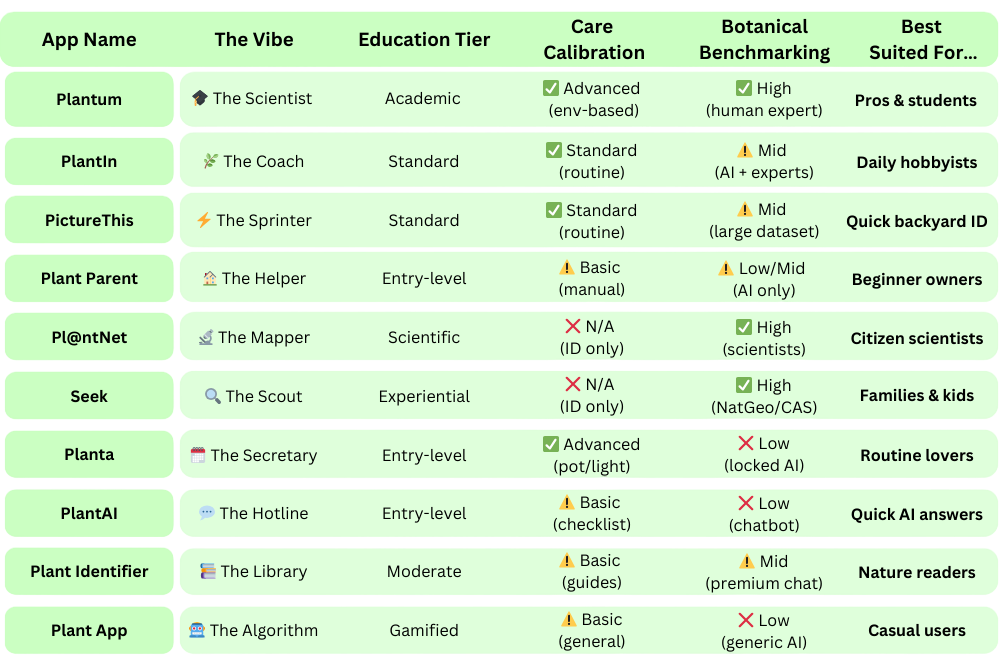
Check out our 2026 Botanical Benchmarking table to see how each contender stacks up in the categories that matter most.
Which Plant App Is Best for You?
The choice depends entirely on your personal plant mission. Are you a student looking for a deep-dive academic resource, or a weekend hiker who just needs a quick name for a cool flower? While a free chatbot might handle a simple question, a pest infestation or a rare specimen requires a platform with real scientific backing. Take a moment to weigh these tiers and choose the tool that will best help your plant knowledge grow.