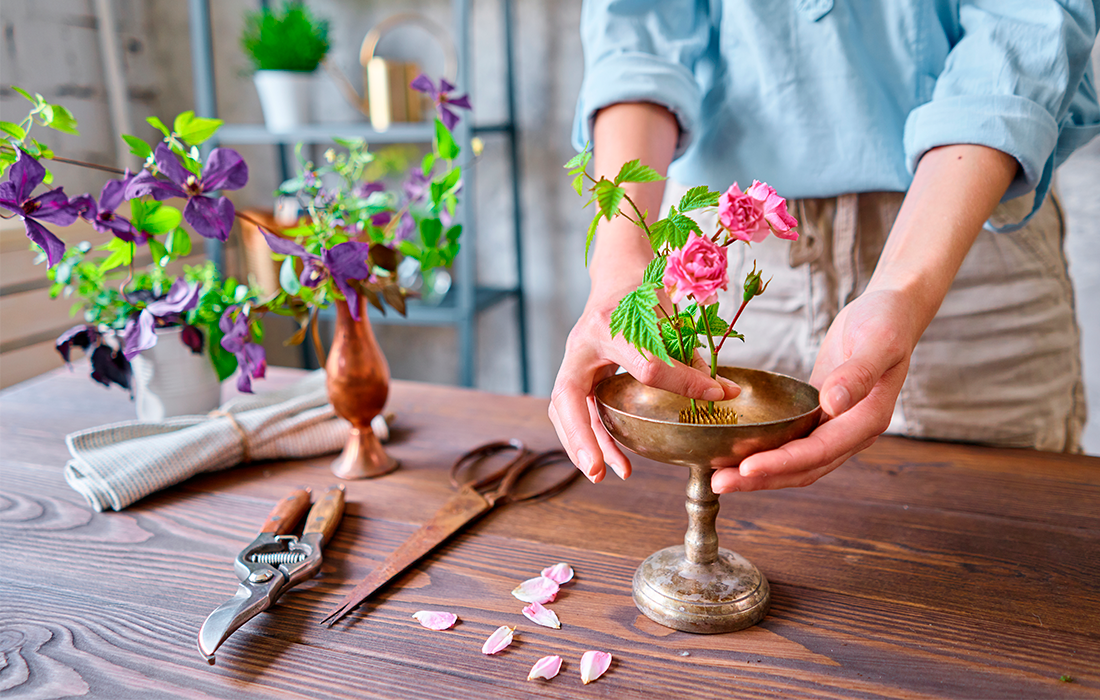
The appreciation of nature runs deep in Japanese culture. But it wasn’t until the late 15th century that the simple act of placing flowers in vases grew into an art form with distinct styles and philosophies.
Over the past 600 years, ikebana has seen rival schools rise and fall, win the favor of the elite, fade into obscurity, and come back stronger than ever. Today, many of these centuries-old schools still teach their time-honored techniques, alongside hundreds of smaller groups across Japan and around the world. Each school brings its own perspective, yet all share a deep respect for nature and balance.
They say that honing the sophisticated skill of “making flowers alive” takes three to five years. While the journey may seem daunting, this guide is here to help you begin—one stem at a time.
Core Principles of Ikebana
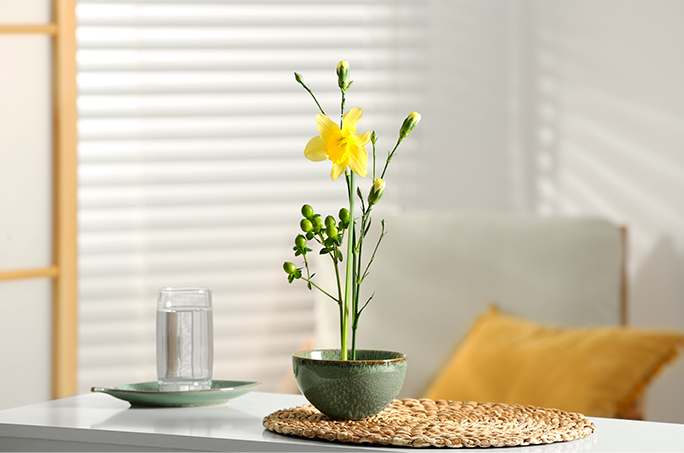
Regardless of the style, a few fundamental principles set ikebana apart from Western floral arrangements:
☝️ Simplicity is key. Negative space isn’t empty—it’s a powerful part of the design.
☝️ Nature is rarely perfect. Ikebana embraces this, celebrating asymmetrical and dynamic forms.
☝️ Every element—flower, stem, and container—should reflect the seasons and the flow of life.
Getting Started: Tools and Materials
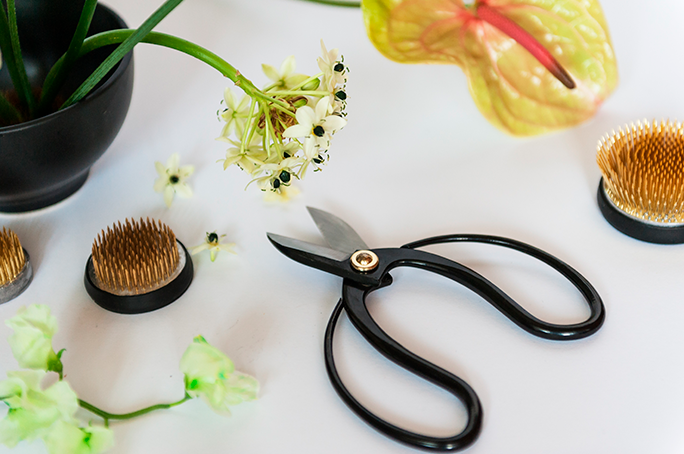
In ikebana, the materials you use matter just as much as how you arrange them. Start with seasonal local flowers and foliage. You’ll be working with three symbolic elements that represent
- Heaven (tall)
- Man (mid-height)
- Earth (low)
To create depth and movement, choose one main plant, a secondary support, and a few fillers. Here are a few beginner-friendly options:
- Main: Iris, Camellia, Gladiolus, or a single branch of pine or plum
- Secondary: Chrysanthemum, Narcissus, lily, or fern
- Filler: Baby’s breath, grasses, or trailing ivy
Depending on the style you choose, you can use a wide, shallow bowl or a tall, upright vase. A kenzan (also known as a frog or pinholder) will help keep your stems in place—an essential tool for structure and support.
Your First Ikebana: The Moribana Style
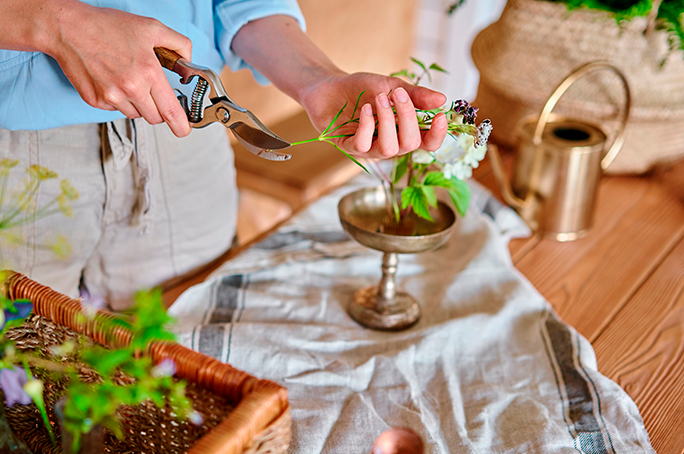
Let’s begin with Moribana, a modern and beginner-friendly style that blends Western floral shapes with traditional Japanese aesthetics. It allows for creative expression while gently introducing the core structure of ikebana.
1. Observe your flowers. Let their shapes, lines, and colors guide your imagination.
2. Choose your container. A shallow dish works best for Moribana. Fill it with fresh water and position the frog slightly off-center, near the back.
3. Pick the tallest element—it should be about 1.5 to 2 times the width and depth of your container added together. Cut the stem at a diagonal and place it at a slight backward and left-leaning angle.
4. Pick a mid-height element about ⅔ the height of the tallest one. Lean it forward and to the right.
5. The shortest element should be about ⅓ the height of the tallest one. Lean it forward and a little toward the front.
6. Add 1 or 2 filler elements. These should add gentle accents, not crowd the arrangement. Allow space and air to flow between each stem.
7. Step back and reflect. View your work from different angles. If anything feels out of place, trust your intuition—and remove it.
Ikebana is more than arranging flowers. It’s a quiet dialogue between you and nature, a meditation in motion. Your first arrangement may be simple—but in its simplicity lies its soul. Let this be the beginning of your journey!