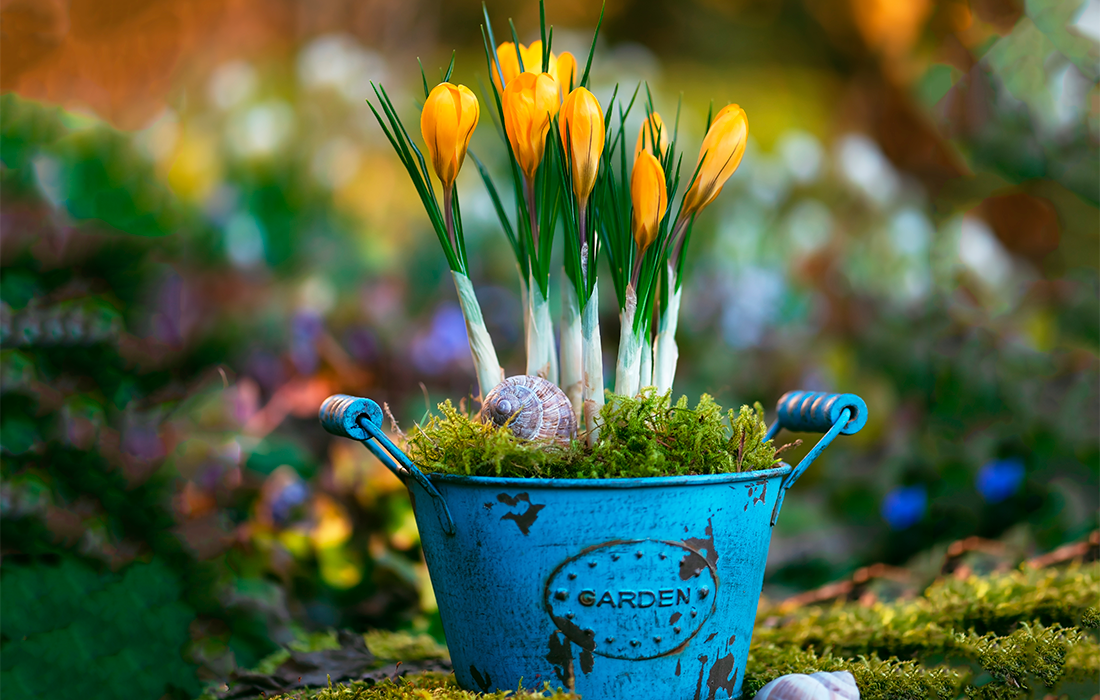
Every plant follows its own natural schedule, but did you know that you can actually take control of it? With a tiny bit of planning and the right techniques, you can make bulbous flowers bloom whenever you want—whether to brighten up gloomy days or to make a fragrant Christmas, St. Valentine’s, or Easter gift. You’ll be able to pull it all off once you master the art of forcing plants.
Simply put, forcing means getting plants to bloom in a season they normally wouldn’t. We recommend trying this technique with plants like hyacinths, tulips, crocuses, and daffodils. While each of them has its specific needs, the basic principles of forcing them are the same.
Preparation Is Half the Battle

Start by choosing large, healthy bulbs; opting for prepared or forced ones will boost your chances, as they’ll be stronger and more resilient.
Next, think of containers. The best ones are shallow but wide (slightly larger than the bulb) with drainage holes.
For the substrate, use loose, well-draining, airy soil. Mix equal parts sand, peat, leaf mold, and compost. Add some charcoal as a natural antiseptic.
Prime the Environment

Then, you’ll have to mimic Mother Nature’s seasonal changes.
Start by tricking your bulbs into believing it’s winter. Move the pots to a cool, dark place where the temperature doesn’t go above 41°F (5°С) for 8–12 weeks. A basement, cool garage, or the bottom shelf of a refrigerator will do. Water the bulbs once the top inch of the soil (1.5–2 cm) dries up, which will be about once every 7–14 days.
After the cooling period, it’s time to wake up your plants. First, place them in a room with filtered light at about 53–41°F (12–15°C); then gradually increase the temperature to 64–68°F (18–20°C). Once the leaves start to show up, place the pots in a well-lit location, but avoid direct sunlight. Make sure there are no heating appliances near the plants.
Here’s a simple guide to popular forced bulbs:
Daffodil

Cooling period: 15–17 weeks.
Notes: Plant in deep pots, submerging the bulbs by half.
Tulip

Cooling period: 12–14 weeks.
Notes: Plant in light, fertile soil and water moderately. Once the cool-down period is over, make sure they receive at least 10 hours of light per day.
Crocus

Cooling period: 15–16 weeks.
Notes: Move crocuses to a light spot with temperatures not exceeding 59°F (15°C). Otherwise, while they might bloom quickly, they’ll wilt quickly, too.
Hyacinth

Cooling period: 10–14 weeks.
Notes: Cover almost entirely with soil, leaving only the top of the bulb above the surface.
Post-Force Care

Congratulations on your blooming success! Now that your hard work has paid off, check your plant’s profile in the app to establish a care routine. And after the flowers have faded, you can transfer the bulbs to your garden. To do this:
- Cut off the flower stalks once they fade.
- Take the plants out of the soil after the foliage has withered.
- Store the cleaned bulbs in a cool, dry place until fall, when they can be planted outdoors.
While the process requires patience and care, the result is a keen gardener’s triumph. So experiment with your favorite blooms, brighten up bleak days with springtime euphoria, and let each success fuel your passion for gardening!